
.jpg) Spaying or neutering your cat is a routine procedure that plays a big role in long-term health and responsible pet ownership. It can help reduce behavioral issues, prevent certain health problems, and curb overpopulation. At North Powers Animal Hospital in Colorado Springs, CO, we're here to help you understand what to expect before, during, and after the procedure.
Spaying or neutering your cat is a routine procedure that plays a big role in long-term health and responsible pet ownership. It can help reduce behavioral issues, prevent certain health problems, and curb overpopulation. At North Powers Animal Hospital in Colorado Springs, CO, we're here to help you understand what to expect before, during, and after the procedure.
This page covers the benefits of spaying and neutering, how the process works, and what you can do to support your cat's recovery at home.
What is involved in Cat Neutering and Spaying?
Cat neutering is the surgical procedure in which a male cat's testicles are removed, making him sterile and unable to reproduce. This procedure also results in decreased testosterone levels, which can reduce or eliminate certain unwanted behaviors and health issues, such as spraying and the desire to escape and roam. This procedure is performed under anesthesia, with small incisions into the skin that heal together in about 10 days.
Spaying a cat is a surgical procedure that eliminates a female cat's ability to reproduce. Your veterinarian will perform an ovariohysterectomy (removal of the ovaries and the uterus) through a small incision in the belly. This procedure is performed under anesthesia, and the cat can typically return home the same day. It typically takes 2 weeks for the muscle and skin to heal back together.
How Does Spaying or Neutering Impact the Health and Well-being of My Cat?
Spaying and neutering do more than prevent unwanted litters. They also provide important health and behavioral benefits for cats and can reduce the risk of several reproductive diseases.
In female cats, spaying prevents uterine infections such as pyometra and eliminates the risk of ovarian and uterine cancers. It also significantly reduces the risk of mammary tumors, particularly when performed before the first heat cycle. Spaying also eliminates heat cycles and the behaviors that can come with them, such as yowling, restlessness, and frequent urination.
In male cats, neutering eliminates the risk of testicular cancer and may reduce some hormone-driven behaviors, including roaming and fighting. Cats that roam or fight are at greater risk of traumatic injuries and exposure to infectious diseases.
Spaying or neutering can't prevent every health problem your cat may encounter, but it is an important part of preventive care and can help support your cat's health and well-being throughout their life.
How Soon Should I Bring My Cat In for Surgery?
When should my cat be spayed or neutered?
The right time to spay or neuter your cat depends on their age, health, and individual circumstances. Elective surgeries are best performed when your cat is healthy, so your veterinary team can help you determine the timing that makes the most sense for your pet.
Many kittens adopted from shelters are spayed or neutered at a very young age so they can safely be placed in their new homes. For most kittens, we typically recommend spaying or neutering around 5 months of age, which is consistent with current feline practice guidelines. At this age, kittens are still young enough that we can perform the procedure before males develop many of the secondary sex characteristics associated with sexual maturity and before females go through their first heat cycle, but mature enough that their systems are better equipped to compensate during surgery.
Timing is particularly important for female cats. Spaying before the first heat cycle dramatically reduces the risk of mammary cancer later in life.
Before surgery, we'll also want to make sure your cat is healthy and up to date on their recommended vaccinations, medications, and grooming needs. Fasting before anesthesia is also important because it helps reduce the risk of vomiting and aspiration during the procedure. Your veterinary team will give you specific instructions about when your cat should stop eating and drinking before surgery.
If your cat has a health condition, is particularly young or small, or has other circumstances that make their situation unique, we may recommend a different timeline. Every cat has their own unique needs, and our goal is to help determine what the best option is for yours!
How Will Spaying or Neutering Affect My Cat's Behavior?
Spaying or neutering can reduce behaviors that are driven by reproductive hormones, but it shouldn't change your cat's basic personality. Your playful, cuddly, independent, or occasionally mischievous cat should still be themselves after surgery.
In female cats, spaying eliminates heat cycles and the behaviors associated with them, such as increased vocalization, restlessness, and attempts to find a mate. In male cats, neutering can reduce behaviors such as urine marking, roaming, and seeking out females. Neutering may also decrease some hormone-driven aggression, although it isn't a guaranteed solution for aggression that has other causes.
It's important to remember that not every behavior problem is caused by reproductive hormones. Fear, anxiety, stress, boredom, learned behaviors, and interactions with other pets or people can all influence how your cat behaves. Spaying or neutering won't necessarily resolve those issues, but your veterinarian can help you figure out what's driving the behavior and what other strategies may help.
.jpg)
How Should I Care for My Cat Before and After Spaying or Neutering Surgery?
Pre and post-operative care is essential for a successful outcome and a safe recovery for your pet. Before surgery, make sure your cat is up-to-date on vaccinations and flea/tick preventative treatments. On the day of the procedure, do not feed your pet after 10 p.m. the night before surgery, but water is allowed. Always ask your veterinarian about their recommended fasting protocol. Bring proof of current rabies vaccination, or be prepared for your pet to receive one during the visit. Your veterinary team will provide written instructions after surgery on medications, feeding recommendations, and recovery time.
After surgery, give your cat a quiet, warm, comfortable place to recover indoors, away from other pets and children. For the first 12 hours, your cat may be sleepy or a little less interested in food than usual. Offer small amounts of food and water once they are fully awake and home, and don't be alarmed if their appetite takes a little time to return to normal.
For the next 10–14 days, it's important to keep your cat's activity restricted. Running, jumping, climbing, and rough play can cause swelling around the incision or even cause the incision to open. This can be particularly challenging with cats, since most kittens have a great desire to play and pounce.
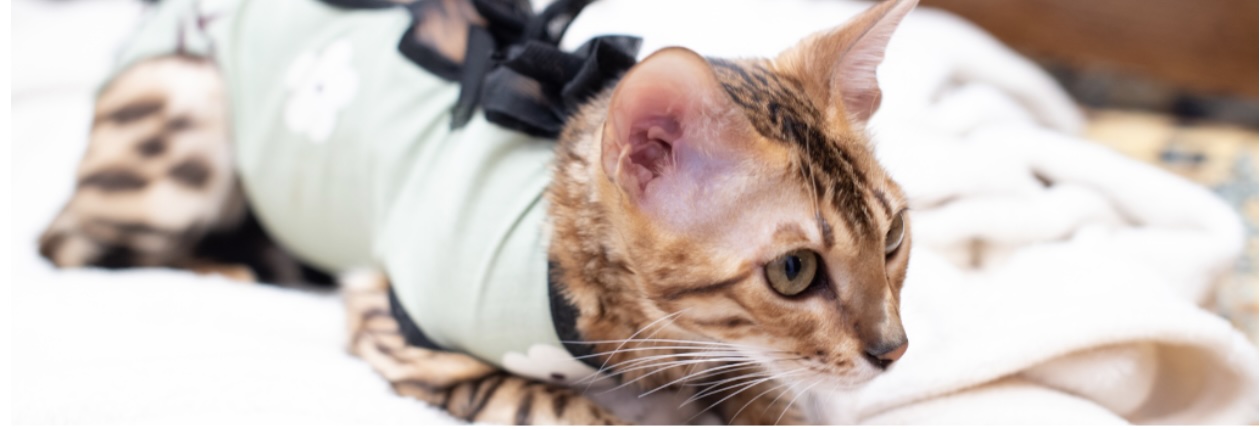
Check the incision twice daily and keep it clean and dry. Don't give your cat a bath or allow swimming, and don't apply ointments or other products to the incision unless your veterinary team specifically recommends them. Your cat may need to wear an E-collar or surgical recovery suit to prevent licking, scratching, or chewing at the incision.
What should I watch for after surgery?
Some sleepiness and a temporarily decreased appetite can be normal after anesthesia, but contact your veterinary team if you notice:
- Significant swelling or a fluid-filled area under the skin
- Increasing bruising or severe redness around the incision
- Discharge from the incision, particularly yellow, green, or brown discharge
- The incision opening or becoming increasingly painful
- Significant or worsening lethargy
- Refusing food or water
- Repeated vomiting or diarrhea
- Anything else that seems unusual or concerning to you
If you're worried about how your cat is recovering, please call us. It's always better to ask than to wonder whether something is normal.
By understanding the importance of proper care before and after spaying or neutering surgery, pet owners can ensure their pets experience a safe and comfortable recovery while also contributing to the overall health and well-being of their pets.
Partnering with North Powers Animal Hospital
Spaying and neutering cats is an essential part of responsible pet ownership. This procedure offers numerous health and well-being benefits to both male and female cats, including a lower risk of cancer, reproductive system-related diseases, trauma-related injuries, and cancer. It can also reduce or eliminate behaviors such as spraying or marking territory, aggression towards other animals, roaming, yowling, and fighting. It also helps reduce the number of strays and cats without a home.
If you live in or near Colorado Springs, CO, and are looking for quality pet care, come visit us at North Powers Animal Hospital where your pet is our priority. Contact us at (719) 212-1857 to set an appointment, or email us at [email protected]. Our staff would love to talk with you!