
If your dog has shown some unusual behavior lately, whether it is separation anxiety or something else, it impacts both you and your pet's overall quality of life, as well as the bond between you. We understand that troubled behavior in your dog is upsetting, and, as a concerned pet parent, you want to nip this in the bud sooner rather than later. We're glad you found us! At North Powers Animal Hospital, we focus on both setting you up for success by avoiding development of undesirable behaviors as well as breaking the cycle of already established behaviors. This approach looks at the whole dog, to ensure we are focusing on the right area to help your pet. We typically use a combination of in hospital and telemedicine to ensure that you have the support you need, as behavior issues are rarely a one-and-done process. That's why we've taken FAQs about dog behavior and answered them as thoroughly and accurately as possible to ensure you have the facts you need to help your faithful canine companion.
If you're looking for a highly trained and compassionate veterinarian in Colorado Springs, CO, we'd love to see your dog and discuss any behavioral concerns you may have, so please call us at (719) 212-1857.
If my dog is having behavior problems, are they capable of change?
Yes, absolutely, your dog is capable of changing behavioral issues. Regardless of the specific problem, we can do training and other things to change that negative behavior. Certainly, the earlier you notice a behavioral change and try to modify it, the better. That's why we emphasize teaching puppies good manners and setting you up to deal with challenges when they're little instead of intervening when a behavior is established. Problems that have been present over a longer period of time or develop in adult dogs typically require a longer period of work to change for the better, but we are here to support you throughout that process.
When should I start obedience training with my dog?
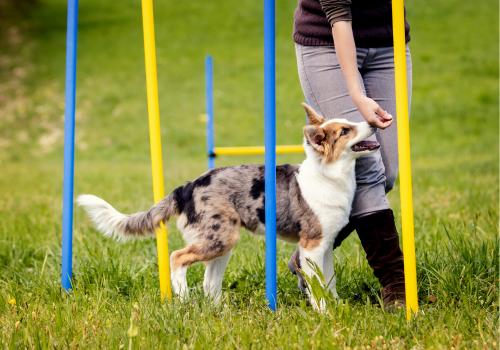 You can't start too early with dog socialization and behavior. It's a lifelong process, but the earlier we start having a positive influence on them, the better off they will be long-term. Start with small, consistent commands/reinforcement words. Be very consistent with what you say in your body language. For instance, if you don't want your dog to do something, saying "no" or a sharp "ah!" might be a good example instead of "don't bark" or "get off the couch." Too many words when you are trying to reinforce a behavior actually just sounds like you are "barking" at your dog, rather than a marker or command, which can lead to frustration for both of you.
Remember, you only have 2-3 seconds from the time a behavior happens to when you can reinforce a behavior. For example, if you reward your dog for coming back to you from across the yard after eliminating, they link the reward to coming up to you, rather than eliminating outside. Rewarding them as they are lifting up from the ground links that behavior to the reward instead. Rewards can be a clicker, treats, play, or praise, depending on the motivation that drives your dog!
As veterinarians, we've long believed that dogs learn something new every day when they are puppies and retain the ability to learn over their lifetime. So what we want them to do is learn the right things every day and not bad behavior, which is why starting obedience training right away is so imperative. Continuing obedience training over the life of your dog also helps reinforce those behaviors, and over their lifetime can reduce the chances of them developing cognitive dysfunction at an earlier age.
What are dogs' most common behavior problems, and how can they be addressed?
There are many dog behavior issues. When they're puppies, the most common behavioral problem you'll see is incessant biting. This is part socialization, part teething. A short, loud "OUCH!" followed by low interaction, and giving them an alternative to chew works the same way their littermates or another dog would correct biting too hard or too much. Remember to positively reinforce when they start chewing on something they are supposed to, like a chew toy. Puppies need direction on what is a good thing to chew, and what kind of biting is not ok. Make sure you are never playing with your puppy using your hands or feet as a target, as this sends mixed messages. Sometimes they're sleepy and just need to be put in a crate as it's time for a good nap.
In adult dogs, the things we see are barking and separation anxiety.
As the ASPCA notes, the signs of separation anxiety in your dog may be:
- Urinating and Defecating - However, if your dog urinates or defecates when you're around, the house soiling probably isn't caused by separation anxiety and warrants a call to your veterinarian.
- Barking and Howling - If your dog doesn't do this when you're around but your neighbors tell you it does this when you're away, it's likely due to separation anxiety.
- Chewing, Digging, and Destruction - Not only can these behaviors ruin your property, but they can also result in injuries in your dog, such as broken teeth, cut and scraped paws, and damaged nails.
- Escaping - The dog often does this by chewing or digging, so, again, your dog can injure itself by doing this due to anxiety.
- Pacing - Some dogs walk in straight lines while others may walk in circles, but they don't do this when their owner is around.
- Coprophagia - When some dogs get separation anxiety, they'll defecate and eat their excrement, which is never good!
Addressing these issues is nuanced because all dogs are different or respond better to certain training habits. And each behavioral disorder does better with one specific type of training. In general, though, when it comes to separation anxiety, you want to start associating something positive with leaving. In other words, the dog gets their favorite treat or toy, like the best little Kong toy with wet food or plain yogurt mixed with treats in it out of the freezer that the dog only gets when you put them in their crate. So, we're associating something very positive with something very negative. Practice performing your leaving cues without leaving the house, to desensitize your pet to the anxiety build-up associated with those behaviors. We can also generate plans for how you leave the house and come home to avoid accidentally reinforcing some of those anxious behaviors. Sometimes, however, we get to the point where we have to use some anti-anxiety medicines. Medications help hand-in-hand with behavior modification, and should always have a plan for how long they need to be used, and how they help support your long term goals for your pet.
Another type of behavior issue is reactivity with other dogs. At that point, it's best to seek out some professional advice. What a trainer or behaviorist will often tell you is that we give dogs the wrong messages. For example, we'll see another dog across the street, and we'll get anxious ourselves. We'll pull on the dog, and our voices change, and we sound like there's a problem going on, which accidentally reinforces reactive behavior. Instead, we can be prepared from a distance to ask for commands or distract our dog with food, and then they'll associate, "I saw a dog across the street, but my owner is happy, I'm going to get food, and we're going to go the other way."
There are many things we can do to limit or eliminate dog behavioral problems. Talk with your veterinarian about the issues that you have with your dog. They will consider your dog's personality and behavior issues and help formulate steps to take to improve that behavior.
Can behavior issues in my dog ever indicate that they are sick?
Absolutely. That's essential to remember, especially if a behavior problem comes up relatively suddenly with no apparent cause. If your dog's drinking more, not eating, not interacting with the family, sleeping more, urinating in the house, or scooting their rear end on the ground, those are all signs of something that could be happening with them. We want to examine your pet and ensure nothing else is going on. Common things causing significant behavior changes can be pain, infection, or even certain neurologic conditions. As dogs get older, cognitive decline can also play a role in behavior changes, and we want to rule out all of those things before we develop a behavior management plan to make sure we are caring for the whole dog.
What are some behavior problems that may be associated with a medical condition?
Many behavioral problems can be associated with medical conditions, so again, it's always best to err on the side of caution and check with your veterinarian.
Some behavior problems that may be associated with a medical condition are:
- Urinating in the house could indicate a UTI, or in older patients, may indicate pain or kidney issues.
- If they're scooting on the ground, they may have anal glands that have become overly full and uncomfortable, which need to be expressed.
- If your dog is snippy or bitey whenever you're touching a particular part, they may be painful there, letting you know, "Hey, don't touch me. I'm in pain."
- Lethargy and not eating or drinking are common symptoms of medical issues in dogs.

How can a veterinarian address my dog's behavior problems?
First, we'll discuss the problems you are having, getting as much detail about your specific situation as possible. Then the veterinarian will examine your dog, screening for pain/discomfort, medical problems that can be identified through an exam, and may recommend lab testing to look for hormone imbalances or issues with certain organ systems. If we've ruled out a medical issues, we will create a treatment and training plan to work on the specific problem that you are dealing with, and set up checkpoints to evaluate how the process is going. If you need more support, we can recommend either good positive reinforcement trainers in town, or even refer you to a board certified behavior specialist. During this process we can also talk about the role of medications, supplements, and alternative therapies to see what works best for your pet.
What should I look for in a trainer?
While you'll find many different opinions on this, nearly every veterinarian will tell you to find a positive reinforcement-based trainer, as just mentioned. Positive reinforcement has been shown to be the most effective means of establishing good behaviors and eliminating undesirable behaviors. It lasts longer than punishment-based training and stands up to challenging situations more than negative/aversive training methods.
Sometimes, it can be hard to tell when you're evaluating a trainer on their website what their training methods are. One thing to watch out for is using an e-collar, essentially a shock or vibration collar. Also, avoid anyone that calls themselves a balanced trainer. In most of these situations, they are using aversive training (meaning uncomfortable or scary negative reinforcement of behaviors), and there's a lot of data out there that says that not only do these techniques not work long-term, but they can actually worsen behavior issues. Instead, look for positive reinforcement; if you need more clarification, contact them. Ask for references, ask what their methods are, and always check in with us if you're not sure.
When might my dog need medication for behavioral problems?
This is an important and ongoing discussion that comes down to figuring out how much this behavior affects your or your dog's quality of life. In some situations, behaviors are particular to triggers. So, some dogs are fine in their house and very happy, but when they go out and see another dog, it becomes an issue. Or some dogs are wonderful, except when they come to the veterinary hospital. In those situations in which a dog is stressed, we sometimes use short-term medications. But for dogs that are anxious daily, that's a stressful way to live. Nobody wants to be scared and nervous all the time. Those are situations in which trying some anti-anxiety medications for long-term use can make a quality of life difference. There are pros and cons to the different medications, and when we use them, so we would always chat about them during a behavior consult to determine the best choice for your dog. Medication therapy ranges from nutritional supplements and certain types of probiotics, to dog-appeasing pheromone collars, to medications like Prozac or gabapentin. Your veterinarian will talk to you about what is most appropriate for your pet and situation.
If you live in or near Colorado Springs, CO, and are looking for quality pet care, come visit us at North Powers Animal Hospital where your pet is our priority. Contact us at (719) 212-1857 to set an appointment, or email us at [email protected]. Our staff would love to talk with you!